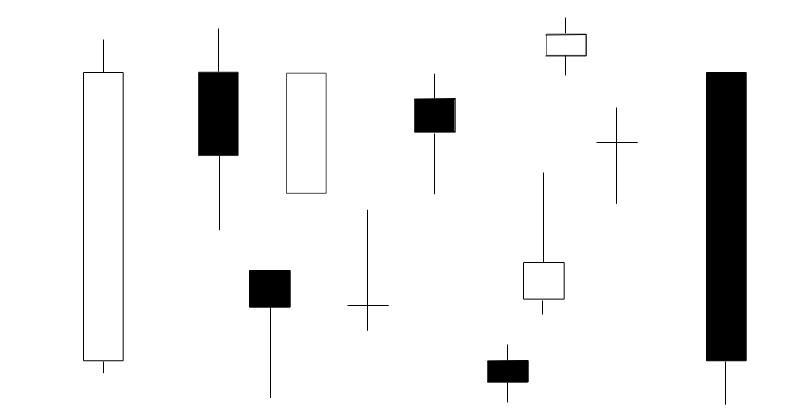
One of the biggest battles for newer traders is sticking to a trading strategy. This post explores why strategy hopping is not the best idea when you are trying to make it as a trader. Interested? Please read on.
Why do We Strategy Hop?
Traders change their strategies for a multitude of reasons, here are the main ones:
- You abandon your strategy (with an edge) because it doesn’t produce profits fast enough.
- You drop your strategy because you don’t trust it or have any confidence in it.
- You get bombarded with “newer and better” strategies from various sources on the internet all the time. Its hard to trust and stick to a strategy that you found by scrolling the internet. .
- Because of greed: You risk too much, take profits too soon, FOMO, revenge trade and overtrade. This can cause a trader to blow up his /her account or do serious damage to it. Whatever the outcome, the trader tends to blame the strategy instead of him / herself. Hence, strategy hopping.
- You can’t accept losses, so you forever look / search for that holy grail system.
- You can’t accept the uncertainty that comes with trading, so you hope to find certainty in a better strategy.
- You don’t understand the nature of your strategy. Because of this you don’t understand in which market conditions it performs well and poorly. Often traders will abandon a strategy during a time when the market conditions aren’t conducive for it.
Why Strategy Hopping Equates to Inconsistent Performance:
Every time you change your strategy, you are essentially starting over. Even though you might learn something new (which is not always bad), you do miss out on some very important stuff that will influence your performance in the long-run. I discuss this next:
- Strategy hopping messes up your data. Remember, you are supposed to journal your trades. This is to review them in order to look for ways you can improve. If you abandon your strategy, you will have to start from scratch every time. You’ll have no baseline. You need a baseline from where you can start improving.
- Your results will be all over the place because different strategies produce different results.
- There is nothing wrong with educating yourself, but at some point you need to start specializing. You have to start becoming a master of one or two trading concepts (patterns, candlesticks, support and resistance, indicators, etc.). Remember that old saying about being a jack of all trades, but master of none.
- Every time you strategy hop, you reinforce bad habits. Bad habits = bad results.
- Most traders, in the beginning, jump from one strategy to another. The most serious ones recognize the madness of it quickly and changes gears. Not being serious about trading will show in your results.
- The ups and downs that comes with strategy hopping can bring up a lot of negative emotions. Trading in a negative state can result in negative performance.
How to Start Sticking to Your Strategy:
First off, internalize the above. You have to get to the point where it makes sense why you strategy hop and how it influences your performance. If you can do that, you will be way ahead of most beginner traders. With that said, let’s look at what else can be done:
- The most important part, for me, is accepting that losses are a part of the game. You will always here me say this because its very important. If you can’t, you will always look for something better, aka the holy grail. Focus on the process of trading and not the outcome.
- You must commit to putting in the required work needed of sticking to a single strategy.
- You have to pick a style / strategy, with an edge, that works for you. Know what you want / need, do your research, and pick your style wisely.
- Once you have your strategy, you need to study it intimately; you need to know what you can expect from it – like how many trades can you expect per day / week / month, what’s the max amount of losses you can expect, how much drawdown is acceptable and what is its win-rate? These are the type of questions yo should be able to answer. The best place to start is with back testing and once you are trading live, journaling.
- You are going to make a lot of mistakes in the beginning, so start small. Again, journal and review all your trades. Look for strengths and weaknesses, do more of what works and less of what doesn’t.
- Minimize distractions, i.e. social media.
- I cannot stress this enough, but you need to start thinking long-term. This will help you develop patience, which is important when it comes to trading.
- Be disciplined. This comes back to the commitment of putting in the work required to become a successful trader. There will be good and bad trading days. On the good ones you might think its not necessary to do the work and during the bad ones you might not feel like doing the work… that’s where discipline come in.
Finally:
Sometimes going down the rabbit hole of finding a new strategy can be very useful, because you learn a lot of what works and what doesn’t. You can also gain a lot of knowledge that might serve you well on your trading journey. Just don’t take too long.
Thanks so much for reading. I trust you’ve learned something. Trade ’em well.
Thanks and Regards,
Trading SOS SOS